TCL comes back to CES every year, and the booth has to land 'Inspire Greatness' before anyone reads a word of copy. For 2026 that meant an entrance that registered from down the hall, plus a working stage inside it: somewhere a live demo could actually run rather than a screen playing a loop.
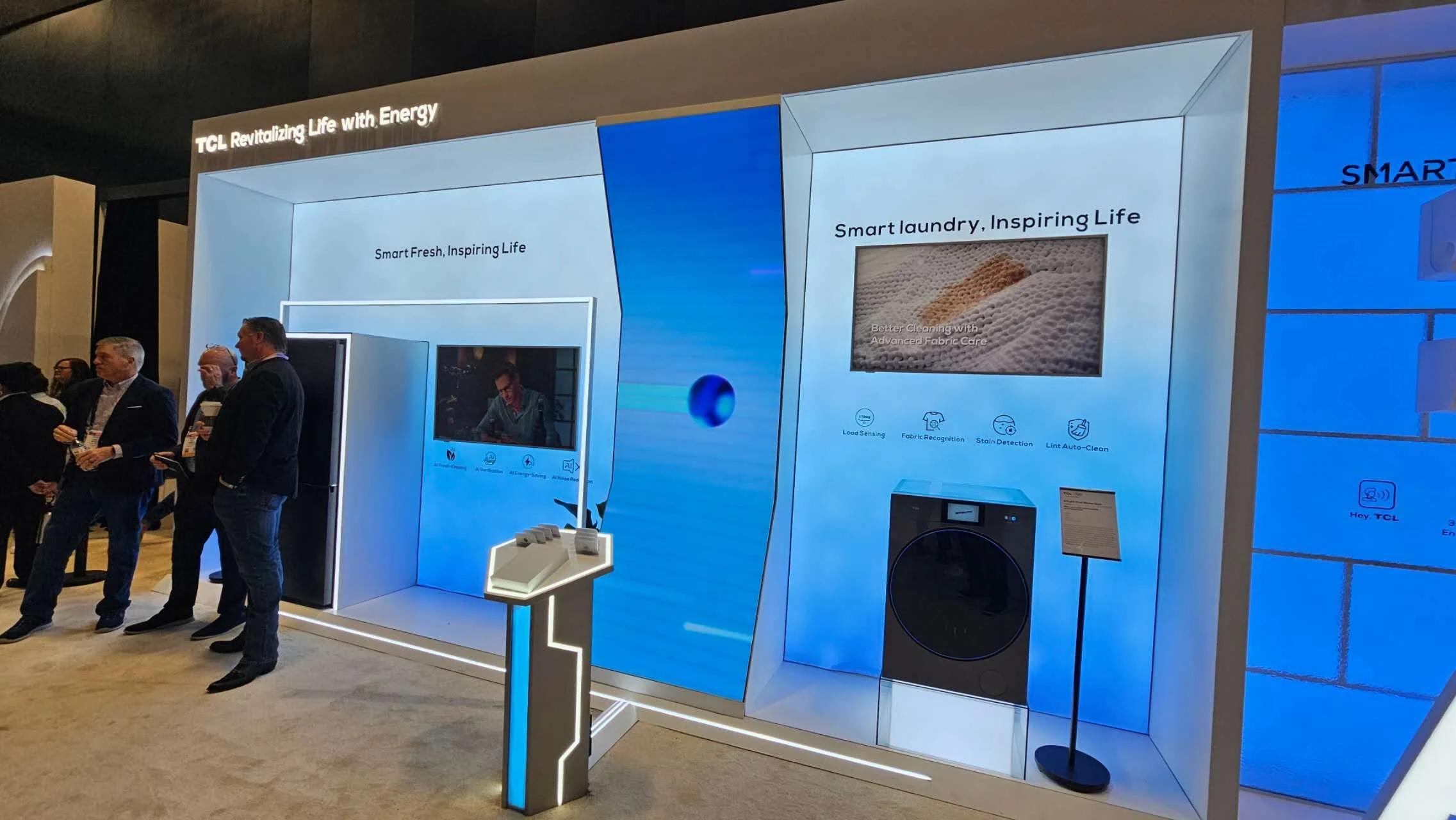
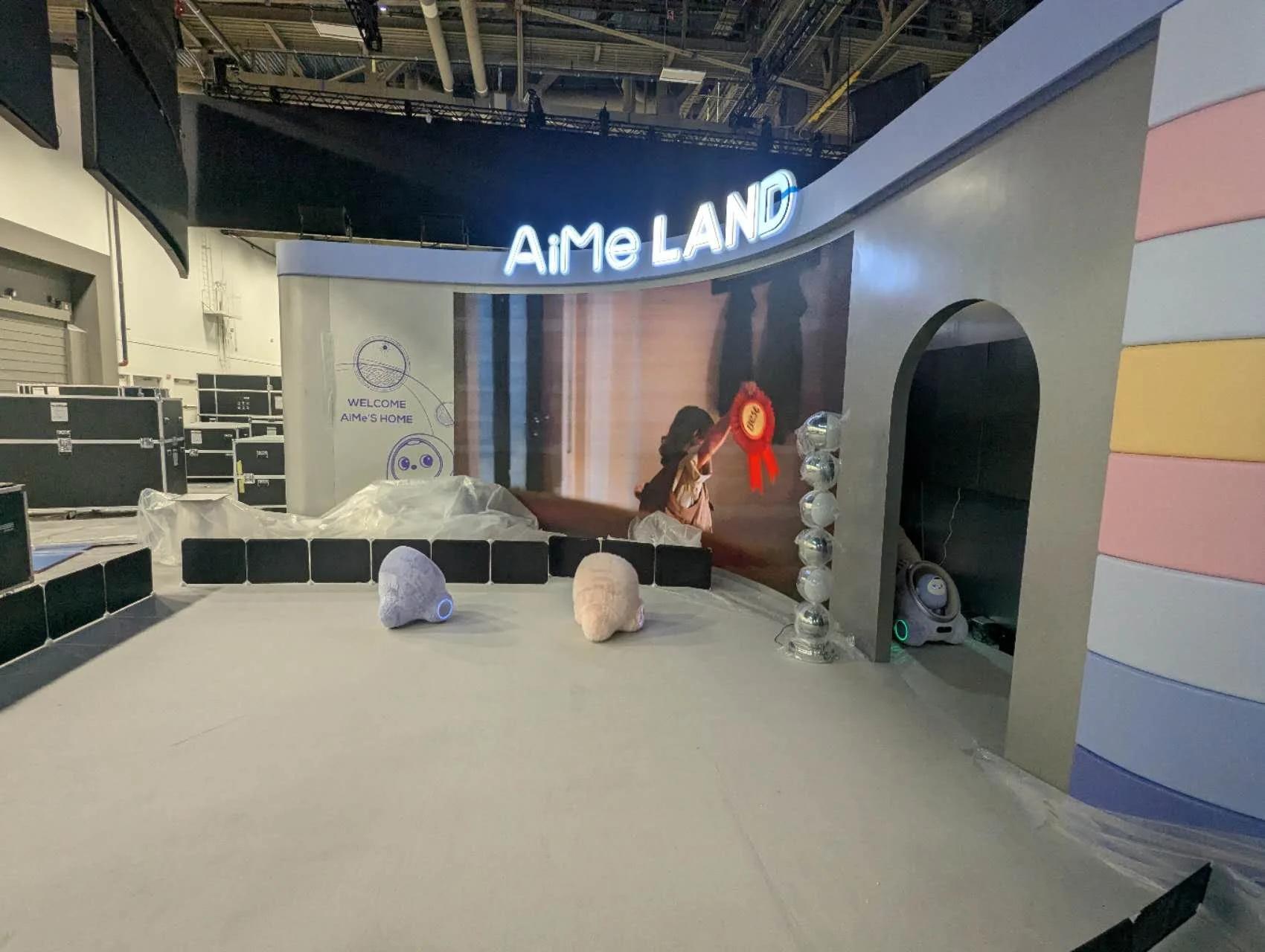
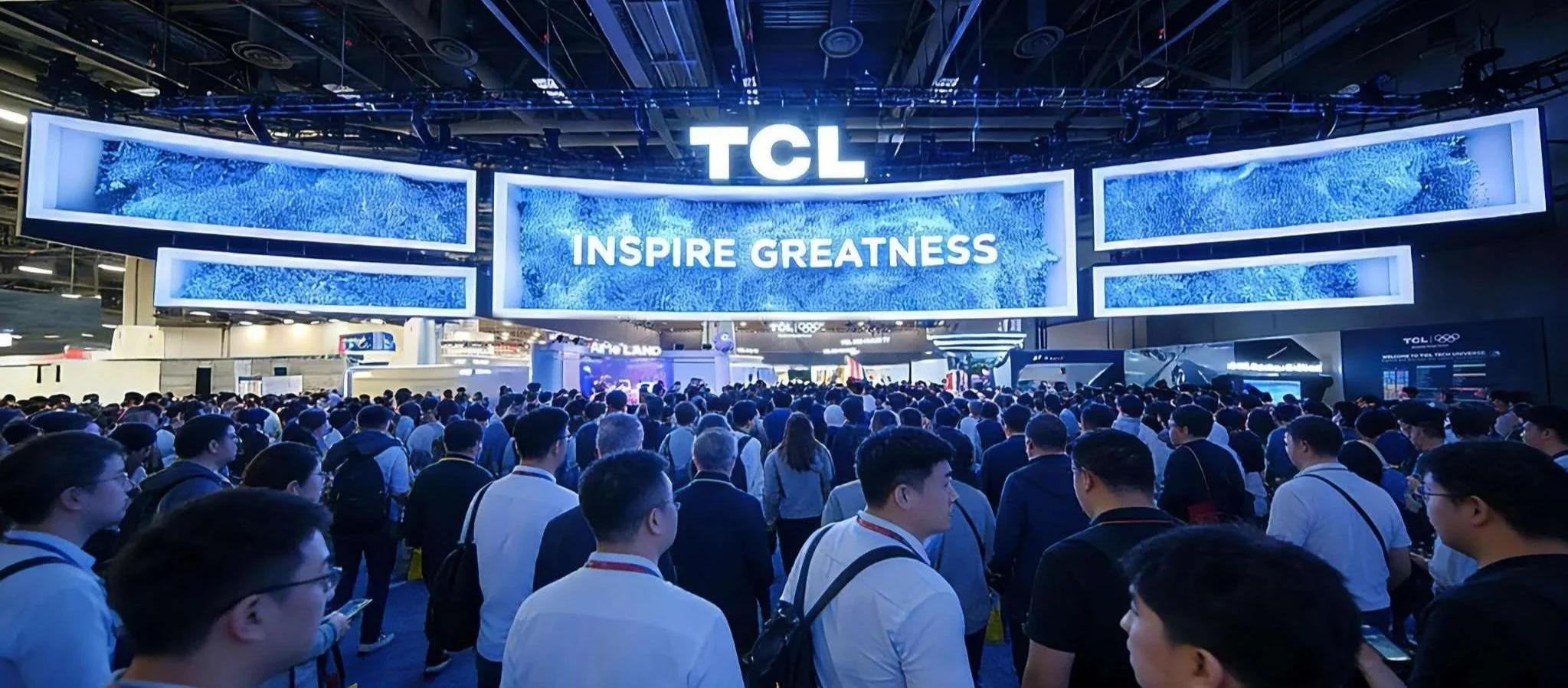
The centerpiece was a hanging ultra-wide P2.6 LED array over the entrance, 588 tiles across five separate walls, 14,208 by 1,728 pixels, about 121 feet end to end. A 36 by 9 tile centre wall carries the middle, with stepped side walls flanking it, and a one tile gap between each wall. Because the walls are discrete rather than one uniform grid, the array takes its shape without breaking the picture. You did not really look at it, you walked under it. We drove it from our media server on four synchronized 4K outputs, and although the wall was physically split into five sections (a center panel with two wings a side), the content read as one continuous image across the whole span. Inside, TCL's AiMe stage got the full live-production stack: speakers and mics, PTZ cameras, video switching and digital audio mixing, with every signal path built to stay up for the run of show. Its backdrop is a curved 45 tile P1.9 wall, 2,304 by 1,280 pixels and about 15 feet across, ground-supported and embedded into the booth structure so the frame never shows. Between the smart-kitchen and smart-laundry zones stood a tall, narrow LED column, 12 P1.9 tiles running 2 wide by 6 high, about 3 feet across and nearly 10 feet tall, angled into three faces, flat through the middle with the top and bottom kicked outward, which still played as one seamless picture despite the angles.
The entrance did what a 120-foot canvas is supposed to do: it stopped people on the way in. The content was built for the shape rather than stretched to fit it, mixing sports clips, display-technology showcases and a forced-perspective particle sequence that gave the five sections real depth. The AiMe stage gave the booth a second anchor, so the space was not only spectacle. There was a live, human moment running on our gear all show.