
LED wall installation types explained
Five ways to put a wall up.
Ground supported, rigged, wall mounted or built into the booth. Here is what each one means and what it needs.
Every LED wall has to attach to something. Which method you use changes what the booth needs, what the venue has to approve, and how much floor you give up. These are the five we build, in plain terms.
Jump to one: Window mount / embeddedWall mountingGround supportedRiggingRigging with a back cover
Window mount / embedded
The LED sits inside an opening in the booth wall, so the structure wraps the screen and it reads as part of the build instead of a panel hung on top of it.
Window-mount gallery →Wall mounting
The wall hangs flat against a booth wall or a hard wall on brackets fixed back to the structure.
Booth structures →Ground supported
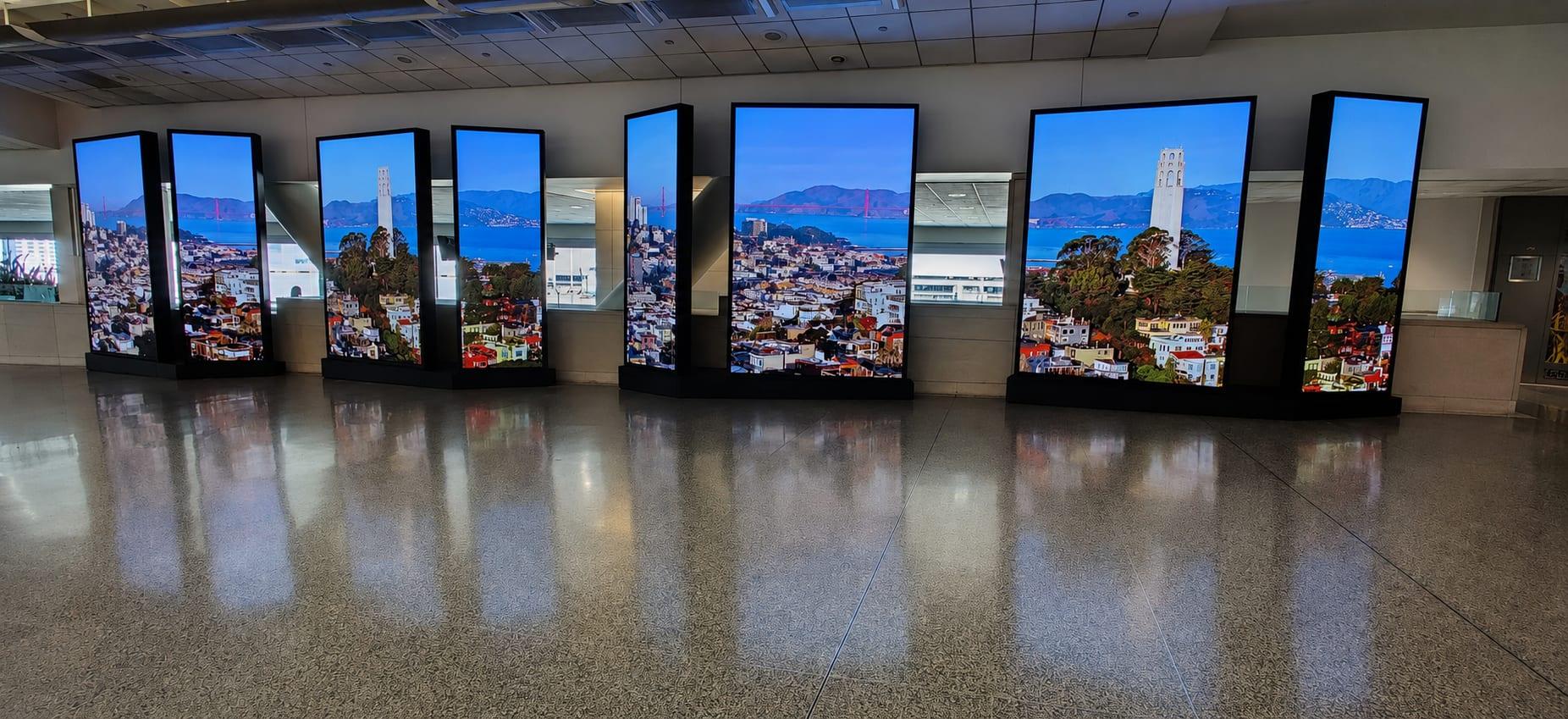
The wall stands on its own frame on the floor. Nothing hangs from the ceiling, so the venue never has to give up a rigging point.
Ground-supported gallery →Rigging
The wall hangs from venue rigging points or from truss, so the floor underneath stays clear.
Hanging and rigged gallery →Rigging with a back cover
A rigged wall with a finished panel across the back, so the rear reads as a clean surface instead of exposed frame and cable.
Hanging and rigged gallery →Send us the booth, we'll tell you.
Most builds pick themselves once we see the floor plan and the venue rules. Send the layout and the show, and we will tell you which method fits and what it needs from the space.
Send us the layout.
Drop your booth size, your show, and your dates. We'll send the quote.
Get a quote